

As the world faces turbulence, Saudi Arabia is reshaping the region’s economic landscape
Hassanein: Saudi Arabia 2026 — From a Stable Economy to a Rising Industrial Power
Al-Harbi: Inflation and Shipping Costs Put Saudi Economic Resilience to a New Test
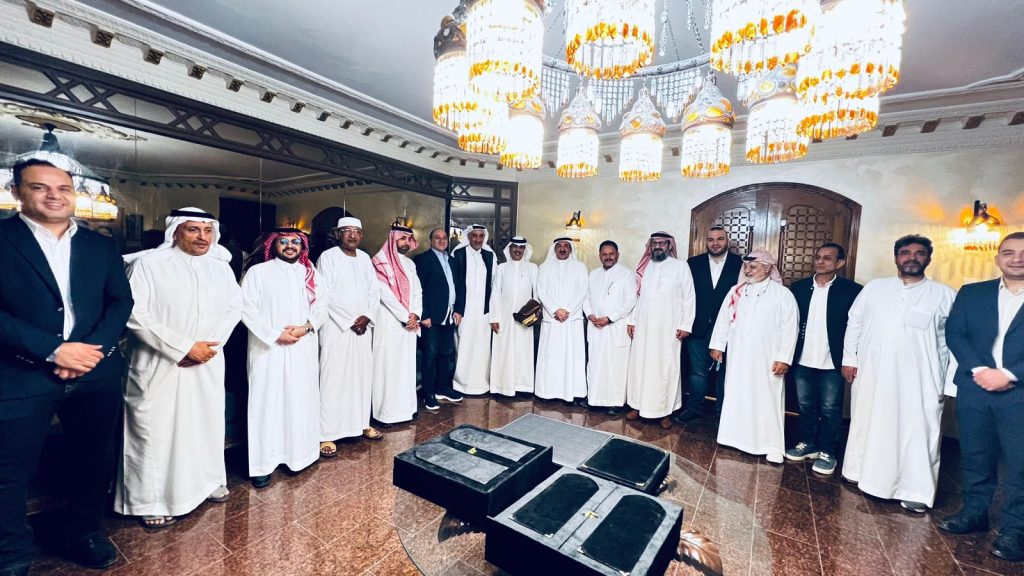
Al-Abu Hosts the 2026 Economic Forum at His Residence in the Presence of Business and Financial Leaders
A number of experts and specialists affirmed that the Saudi economy continues to demonstrate high levels of resilience and stability in 2026, despite global challenges linked to supply chain disruptions, rising shipping and energy costs, and volatility in raw material prices.
These developments have affected markets and industries across the region, causing delays in projects and the postponement of others. Nevertheless, Saudi Arabia remains among the least affected countries compared with others, thanks to its strategic geographic location, economic and political strength, diversified investments, and its ability to develop rapid solutions and effectively manage crises.
These remarks were made during a forum titled “Saudi Economy 2026: Strategic Resilience in the Face of Inflation and Supply Chain Shifts,” held in Riyadh. The event was attended by media representatives from the capital, as well as experts in economics and finance. The forum discussed major economic transformations, logistical challenges, and industrial opportunities in the Kingdom, with participation from leading specialists in economics, industry, and logistics.
In this context, businessman and industrialist Ahmed Hussein Al-Abu explained that the performance of the Saudi economy during the first half of 2026 reflects the strength and diversity of its structure. He noted that the Kingdom no longer relies solely on oil as its primary source of income, but rather on an integrated system of industrial and service sectors.
He also acknowledged that markets have experienced noticeable increases in the prices of goods and industrial raw materials due to regional tensions, changing patterns in manufacturing, imports and exports, and the rerouting of trade routes. However, he emphasized that Saudi Arabia remains less affected than other countries in the Gulf, the Middle East, and even parts of Europe.
He added:
“What we are witnessing today is the direct result of years of work aimed at diversifying the economy, which has strengthened its ability to confront global changes.”
Al-Abu pointed out that rising prices of raw materials, particularly iron and aluminum, have placed clear pressure on contracting sectors and major projects. At the same time, however, they have created new opportunities for expanding local manufacturing and reducing dependence on imports.
He stressed that the current phase represents a strategic opportunity to localize heavy industries, adding:
“Saudi Arabia is well positioned to become a regional industrial hub within the next five years, given its advanced infrastructure and competitive energy resources.”
For his part, logistics expert Azzam Al-Harbi confirmed that higher shipping costs in 2026 have gradually begun to affect commodity prices. He explained that some shipping routes have seen costs double due to geopolitical shifts and the rerouting of transport lines.
He said:
“What is happening in global maritime corridors has reshaped the shipping map and increased supply costs, which has indirectly affected the end consumer.”
Al-Harbi noted that the main reasons behind higher shipping costs include rising fuel prices, increased pressure on alternative ports, and the redistribution of global trade flows. He added that Saudi Arabia now occupies a strategic position within this logistical transformation.
Meanwhile, financial and economic expert Dr. Hatem Hassanein stated that Saudi Vision 2030 has played a pivotal role in strengthening the economy’s ability to absorb global shocks by reducing dependence on a single source of income and diversifying the economic base.
Engineer Abdulkalfi Al-Abu pointed out that investment opportunities at the current stage are heavily concentrated in manufacturing industries, metals, supply chains, and infrastructure-related sectors, emphasizing that these areas will serve as major growth drivers in the coming phase.
In the same context, economic writer and analyst Dr. Hatem bin Talib stressed that Saudi Arabia remains relatively less affected than many regional economies, thanks to prudent fiscal policies, strong reserves, and continued capital spending on major national projects.
He added:
“The inflation we are witnessing today is driven more by external factors than domestic ones. We expect relative stability as supply chains gradually improve, although this process may continue through the end of the current year.”
The forum concluded with a consensus that current challenges, at their core, represent strategic opportunities to strengthen local manufacturing, develop supply chains, and improve the efficiency of the national economy. This aligns with the objectives of Saudi Vision 2030 and reinforces Saudi Arabia’s position as a regional economic and industrial center.